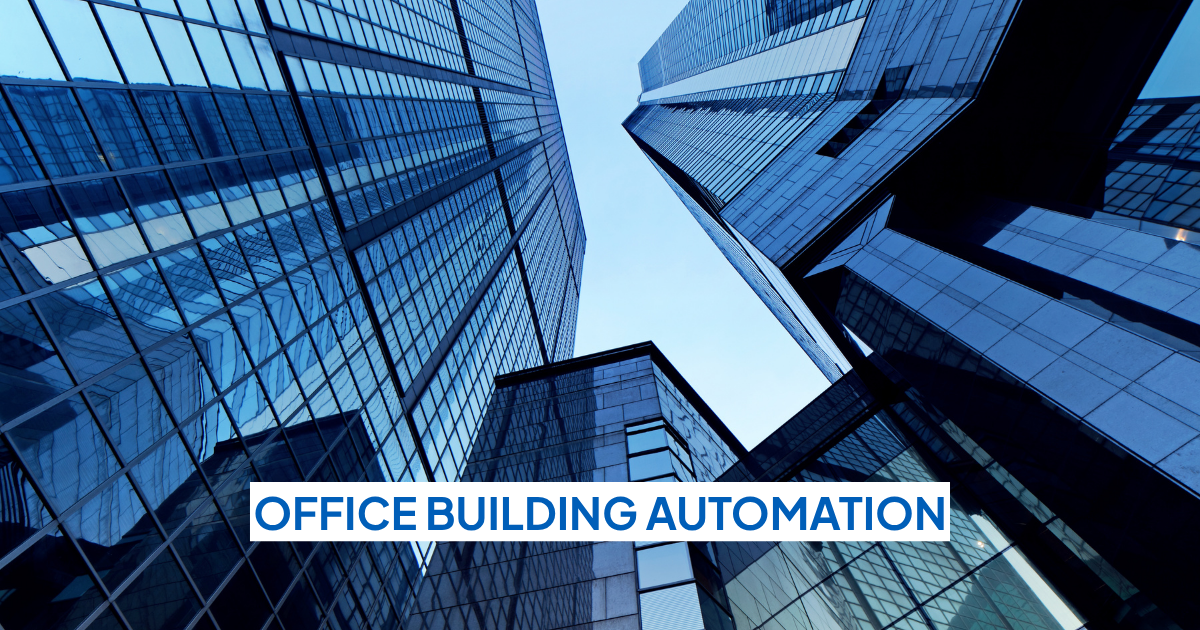
Office buildings run on thin operating margins, and energy is one of the biggest line items an owner can actually control. The numbers make the point. Buildings account for roughly 40% of energy use in the United States, HVAC is the single largest energy end use in a commercial building at about a third of the total, and the EPA estimates that around 30% of the energy used in commercial buildings is simply wasted.
That waste is more than a cost problem. In a competitive leasing market, an uncomfortable building loses tenants, and owners are under growing pressure to report on energy and emissions. Building automation is how an office building attacks all three at once: lower bills, better comfort, and cleaner ESG numbers.
The problem: comfort complaints, rising costs, and reporting pressure
Most office buildings were commissioned once and then left to drift. Controls that were dialed in on opening day slowly fall out of tune. Zones fight each other, floors get conditioned when they are empty, and equipment runs on a schedule nobody has revisited in years.
The tenant feels it first. Hot and cold complaints are the top source of friction between a property team and its occupants, and comfort is a real factor in whether a tenant renews. Meanwhile the energy that pays for all that discomfort keeps climbing, and the building’s aging systems quietly drag down its value and its ENERGY STAR score.
On top of that, owners now face reporting requirements and investor expectations around energy and carbon. Pulling that data together by hand, building by building, is slow and error prone.
The solution: one system that pays for itself
A building automation system brings a building’s HVAC, lighting, and metering under one intelligent platform that adjusts to how the building is actually used and shows you what is happening in real time.
Comfort that holds. Demand and occupancy-based control keeps occupied spaces at the right temperature and cuts back where no one is working. Fewer complaints, steadier conditions, and a property team that is not chasing thermostats all day.
Lower energy bills. Running equipment to match real demand, catching faults early, and optimizing the central plant typically trims commercial building energy use by 15 to 30 percent, depending on the building’s age and condition. According to the EPA, ENERGY STAR certified buildings already use about 35 percent less energy than their peers.
ESG reporting made simple. The system captures energy and performance data automatically, which feeds tools like ENERGY STAR Portfolio Manager and makes energy and carbon reporting far less painful.
Asset value protected. A well-run, efficient, well-documented building holds its value and its certifications, which matters at refinancing and sale.
Integrate what you have, in phases
One misconception is that better controls mean gutting the building. They usually do not. A vendor agnostic integrator can bring the existing mix of equipment and control brands onto one platform, and modernize floor by floor or system by system, so the building keeps running and the budget can be spread over time. That protects the investment already in place and avoids the cost and disruption of a full replacement.
What it means for the people responsible
For a Property Manager, this is fewer complaints and cleaner operations. For a Facility Director, it is real visibility and fewer emergencies. For a CFO or owner, it is lower operating cost, a stronger ESG position, and a building that holds its value. The strongest projects give each of those stakeholders a clear reason to move.
Where to start
The first step is a clear read of how your building runs today and where the savings are hiding. That is what a facility assessment provides, and it gives you the numbers to make the case.
If you want to see what is possible in your building, schedule a complimentary facility audit. It is a no risk way to find the waste before you commit to anything.
Schedule a complimentary facility audit
Frequently asked questions
How much energy can office building automation save?
Commercial buildings commonly cut energy use by 15 to 30 percent through demand-based control, fault detection, and plant optimization, depending on the building. For context, the EPA estimates about 30 percent of the energy used in commercial buildings is wasted, and ENERGY STAR certified buildings use roughly 35 percent less energy than their peers.
Will automation reduce tenant comfort complaints?
Yes. Occupancy and demand-based control holds occupied spaces at steadier conditions, which reduces the hot and cold complaints that drive friction and affect renewals.
Do we have to replace all of our existing systems?
Usually not. A vendor agnostic integrator can bring existing equipment and multiple control brands onto one platform and modernize in phases, protecting your prior investment.
How does building automation help with ESG reporting?
The system captures energy and performance data automatically, which feeds tools like ENERGY STAR Portfolio Manager and makes energy and carbon reporting much easier than manual tracking.
What is the first step?
A facility assessment that shows where energy is being wasted and where the savings are, so any decision is grounded in your actual building.
About the author
Will Carter is Director of Sales at Hoffman Building Technologies. He works with commercial property owners and other facility operators across the United States on building automation and systems integration.
About Us
Hoffman Building Technologies has been a building automation and system integration specialist since 1985. We are 100% employee-owned and serve office buildings and other facilities across the United States and into Europe. We integrate the platforms a facility already has rather than locking it into one brand.
Home | Office Buildings | Services | Contact Us | News & Blogs