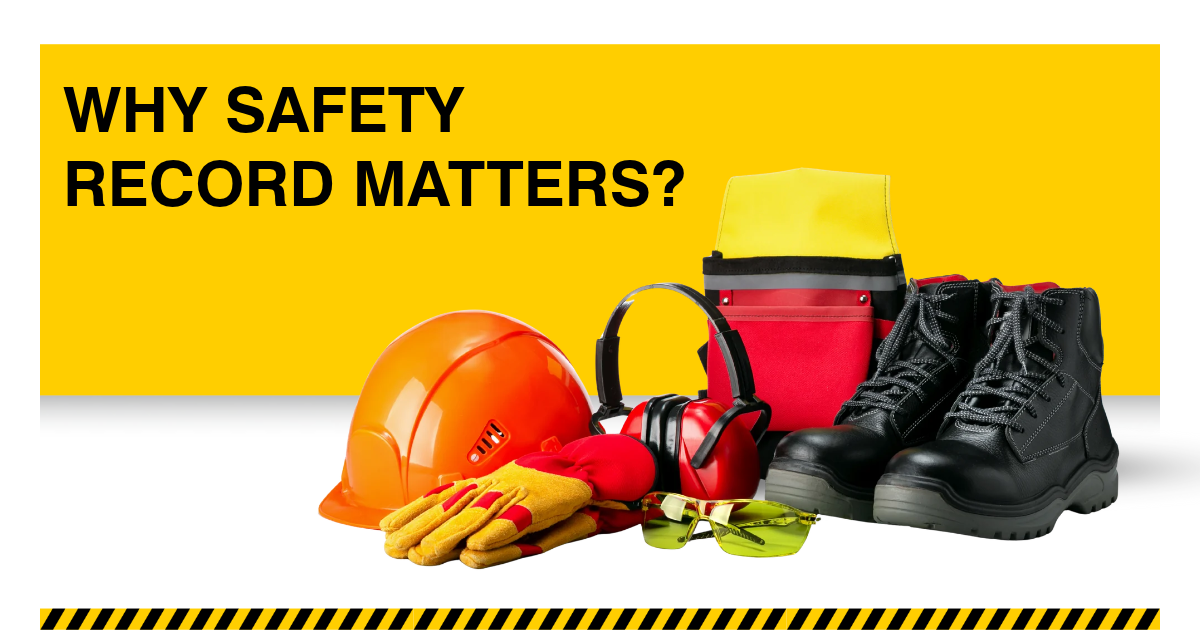
Many owners and general contractors check a contractor’s safety record before they ever open the price.
That can feel backward when you are comparing bids. But a controls contractor works in your mechanical rooms, above your ceilings, and inside live electrical panels, often while people are still using the building. A weak safety record is a risk you inherit.
Two Numbers Owners Ask About
Two measures show up on almost every prequalification form.
- TRIR, the Total Recordable Incident Rate. It compares OSHA recordable injuries and illnesses to hours worked. The Bureau of Labor Statistics formula multiplies the number of cases by 200,000 hours, which equals 100 full time employees working a year, then divides by the hours actually worked. BLS reports that private industry averaged 2.3 recordable cases per 100 full time workers in 2025.
- EMR, the Experience Modification Rate. Your workers’ compensation insurer assigns it by comparing a company’s claims history to similar companies. A 1.0 is about average, and lower is better. It drives insurance cost, and owners use it as a quick read on how a contractor manages risk.
A case is recordable under OSHA’s rules when it involves medical treatment beyond first aid, days away from work, restricted work or a job transfer, loss of consciousness, or a significant diagnosed injury or illness. Ask any contractor for both numbers for the last three years, not only the latest one.
What a Safety Record Really Tells You
Numbers look back. What sits behind them is planning, supervision, training, and whether a crew feels free to say stop. A contractor that plans hazards before the work starts also tends to plan the controls sequence before the work starts. The habits travel together.
How We Approach Safety
We hold ourselves to a high standard, and we stay involved instead of leaving safety to paperwork.
- Training for everyone. OSHA 10 for all team members, OSHA 30 for our project managers, and NFPA 70E training for electrical safety.
- Planning first. We identify hazards and plan the work before a crew starts.
- Speaking up. Anyone on a job can raise a concern, and we expect them to.
- Outside review. Highwire awarded us its Gold Safety Award for the fourth year in a row. Its program looks at safety performance and at the safety management systems behind it. You can read about it in our Highwire Gold Safety Award post.
- Daily, not occasional. Safety is a daily expectation, not a meeting topic. Leaders take part in the training and the field practices.
Why Ownership Changes the Way People Work
We own this company. We look out for each other like it.
When the person next to you is also an owner, you step in. A hurt teammate is someone you know, and the cost lands on all of us. That is the difference we described in our post on employee owned building automation service, and it shows up on the job site more than anywhere else.
Safety Reaches Your Occupants Too
Our crews work in critical environments, data centers, and government facilities, where people and live systems share the space. Good safety habits protect the people in your building as well: careful planning around live systems and clear communication with your facility team. It is part of how we deliver building automation systems.
Five Questions to Ask Any Controls Contractor
- What are your EMR and TRIR for the last three years?
- What safety training do your project and field teams complete?
- Is your electrical work done by people trained in NFPA 70E?
- How do you plan hazards before a job starts?
- What happens on site when someone raises a concern?
FAQ
What is TRIR?
The Total Recordable Incident Rate. It compares OSHA recordable injuries and illnesses to hours worked, scaled to 200,000 hours, so companies of different sizes can be compared.
What is EMR?
The Experience Modification Rate, a workers’ compensation score based on a company’s claims history compared with similar companies. A 1.0 is about average, and a lower number is better.
What is the difference between OSHA 10 and OSHA 30?
Both are OSHA outreach training courses. The 10 hour course is aimed at entry level workers, and the 30 hour course is aimed at supervisors and others with safety responsibility.
Why do owners check safety before price?
An injury on site can stop work, hurt people in the building, and raise costs for the owner. A contractor’s record helps owners judge that risk early.
Planning a Controls Project?
Get a Complimentary Facility Audit
About the author
Chris Stegall is Vice President of Operations at Hoffman Building Technologies. He oversees how we deliver projects in the field.
About Us
Hoffman Building Technologies has been a building automation specialist since 1985. We are 100% employee-owned and serve government and other facilities across the United States and into Europe. We integrate the platforms a facility already has rather than locking it into one brand.
Home | Government | Services | Contact Us | News & Blogs